Custom furniture is no longer an exclusive luxury. In 2026, digital technology is making bespoke furniture more accessible, faster to design, and easier to order than ever before. Whether you are planning to furnish your home with pieces perfectly tailored to your space or simply curious about where the industry is headed, this article covers the trends that matter and how you can benefit from them.
Why demand for custom furniture keeps growing
Modern apartments come with increasingly varied floor plans — niches, atypical angles, compact spaces. Off-the-shelf furniture from showrooms rarely fits perfectly. Add to that the growing desire for personalization: the exact particleboard finish that matches your flooring, soft-close hinges, full-extension slides for drawers, a countertop cut to the millimeter.
- Most small and medium furniture workshops still rely on paper sketches, manual Excel calculations, and disconnected tools — leaving a clear productivity gap for those who adopt digital workflows
- Demand for bespoke furniture is steadily rising in Eastern European markets, where local manufacturers have the advantage of flexibility and proximity
- Designers who can go from client brief to photorealistic 3D + final price in the same meeting are pulling ahead of those still working in 2D
Personalization is not just about aesthetics. It is about functionality: wardrobes with internal layouts you choose yourself, kitchens with optimized storage systems, desks with integrated cable management.
Digital transformation of the furniture industry
The furniture industry is undergoing a quiet revolution. Until recently, the ordering process looked something like this: visit a workshop, manual measurements, a hand-drawn sketch, 2-4 weeks of waiting, and the hope that the final result would match expectations.
Now, thanks to digitization, the process is becoming fundamentally different:
- 3D design — see the furniture before it is produced, with realistic materials, textures, and lighting
- Photorealistic rendering — receive images that show exactly how the piece will look in your space
- Automated specification generation — cutting lists, edge banding, CNC routing calculations are generated automatically, eliminating manual errors
- Real-time transparent pricing — know the exact cost before confirming the order
The majority of furniture workshops still operate without end-to-end digital tools. Designers and manufacturers who adopt them now gain a clear competitive edge.
Key custom furniture trends for 2026
VR presentations for clients
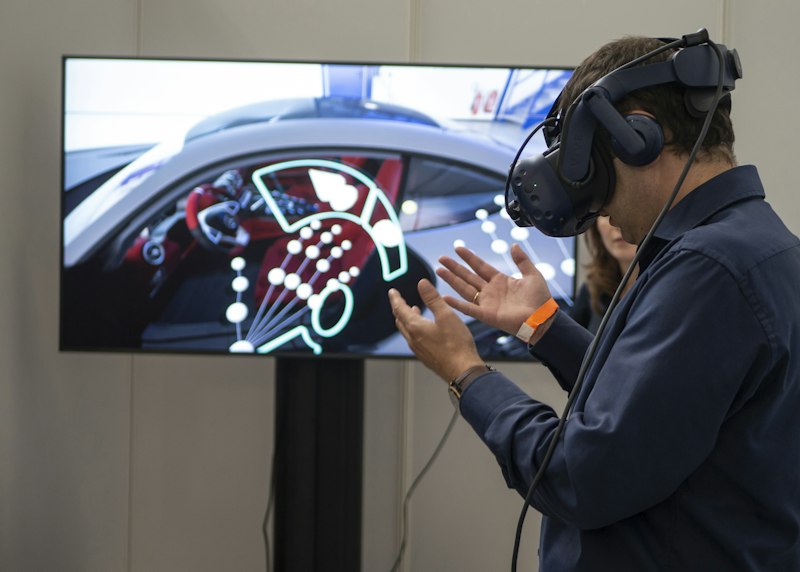
Imagine being able to "walk into" your new kitchen before a single sheet of particleboard has been cut. Virtual reality (VR) presentations allow exactly that: you move through the space virtually, open drawers, check the countertop height, see how light falls on the facades.
For you as a client, this eliminates unpleasant surprises. For the designer, it dramatically reduces revisions and post-installation complaints. Both sides win.
Online 3D configurators
An increasing number of manufacturers offer 3D configurators directly on their websites. You select the furniture type, dimensions, materials (melamine particleboard, painted MDF, veneer), hinge and slide types, edge banding color — and see the result instantly. Some configurators also calculate the price in real time.
This trend fundamentally transforms the buying experience: you no longer need to physically visit a showroom to explore your options.
Online ordering with delivery and installation
The "custom furniture online" model is gaining traction rapidly:
- Enter your room dimensions
- Choose your configuration in the 3D configurator
- Receive a photorealistic rendering and final price
- Confirm the order online
- CNC production ensures millimeter precision
- Professional delivery and installation
This model reduces intermediary costs and makes bespoke furniture accessible to a broader audience.
Transparent pricing with no surprises
One of the biggest frustrations for custom furniture clients has always been price uncertainty. "We will calculate and get back to you" — a phrase that could mean days of waiting.
Near-shoring: furniture production moves back to Eastern Europe
A global trend with direct impact on markets in Romania, Moldova, and beyond: near-shoring. Furniture production is migrating from Asia back to Eastern Europe, particularly Romania and Poland.
Why?
- Logistics costs — shipping containers from Asia has become expensive and unpredictable
- Lead times — 8-12 weeks from China versus 2-4 weeks with local production
- Flexibility — Eastern European manufacturers can handle small batches and custom orders, which mass-production factories in Asia cannot do efficiently
- Quality — quality control is easier to ensure locally
- Sustainability — the carbon footprint is significantly lower
For Eastern Europe, this represents a major opportunity: more orders, more jobs in the furniture sector, and an urgent need for digitization to handle growing demand.
How technology makes custom furniture affordable
Until recently, custom furniture cost more than standard alternatives for two reasons: design time and error risk. A designer had to spend hours or days manually creating technical documentation — cutting lists, edge banding calculations, CNC routing schemes.
Modern digital tools eliminate these inefficiencies:
- 3D design instead of paper sketches — from hours to minutes
- Automated technical documentation — cutting lists, edge banding, and routing calculations generated in 5 seconds
- Direct CNC export — production files are generated automatically, without manual data transfer
- Materials marketplace — access to supplier catalogs directly within the software, with up-to-date pricing
The result: the designer works faster, makes fewer mistakes, and the cost of the design phase drops dramatically. These savings are passed on to you, the end client.
What to expect next: AI, AR, and instant production
Trends that will shape the industry in the coming years:
- AI-assisted design — algorithms will suggest optimal configurations based on room dimensions, style preferences, and budget. They will not replace designers but make them more efficient
- AR (Augmented Reality) try-before-you-buy — point your phone camera at an empty wall and see how a wardrobe or bookshelf would look in real scale, with exact materials
- Accelerated CNC production — with automatically generated, error-free specifications, the time from order to installation compresses significantly
- Integrated platforms — a single ecosystem connecting the client, designer, materials supplier, and manufacturer
How Art Rocket fits into these trends
Art Rocket is a digital ecosystem built specifically for this transformation. Technically, it is a furniture-focused extension on the SketchUp 2026 engine, with Nscape for photoreal/VR rendering and Layout for 2D documentation — which gives designers a mature modeling core plus the furniture-specific automation that generic 3D tools lack. The platform connects every stage of the process:
- 3D design with photorealistic rendering on SketchUp 2026 engine
- VR presentation via Nscape — clients "walk into" the project before production begins
- Automated technical documentation in 5 seconds — cutting lists, edge banding, routing
- CNC export directly from the project (DXF, BAZIS, OpenCutList)
- Materials marketplace with over 1,500 SKUs from 17 suppliers across Moldova and Romania
- Active designer community — 1,220 designers in 5 countries already use the platform daily
For designers, this means increased productivity and higher revenue. For manufacturers, it means precise specifications and fewer errors. For you as a client, it means quality bespoke furniture at an accessible price, delivered faster.
Conclusion
The custom furniture industry is undergoing an accelerated transformation. Digitization, VR, 3D configurators, and near-shoring are creating opportunities for industry professionals and clients alike.
Concretely, the Art Rocket ecosystem now shows 1,220 active designers across 5 countries, 17 suppliers with 1,500+ live SKUs, an average B2C deal size of €40K, and custom design at €10/m² versus €50/m² on the traditional market. Adopting these tools is no longer an experiment — it is how custom furniture gets shipped in 2026.
If you are looking for a designer who uses the best digital tools to design your furniture, or if you are a designer looking to modernize your workflow, the bespoke furniture of tomorrow is being built on platforms like Art Rocket.
A note on the stack — Art Rocket runs on SketchUp 2026
Throughout this article, Art Rocket is referenced as a platform. To be precise: Art Rocket is an official extension built on the SketchUp 2026 engine. Nscape is the VR rendering engine embedded inside Art Rocket. Layout is the 2D technical documentation module. The three ship as one environment — you do not assemble a pipeline of separate tools.
This matters for three reasons:
- SketchUp is the industry standard. Over 50 million designers worldwide already know the modeling environment. If you have used SketchUp before, Art Rocket feels like a natural extension — you onboard in 1-2 days, not weeks.
- Nscape VR is native. You do not install a third-party rendering plugin and pray for compatibility. The VR walkthrough button is inside Art Rocket, on SketchUp 2026, every time.
- Layout 2D is built in. Technical documentation (assembly drawings, cut lists, CNC export to DXF / BAZIS / OpenCutList) generates directly from the SketchUp model without reformatting or manual redraws.
In short: Art Rocket is not a competitor to SketchUp — it runs on SketchUp 2026 and adds the furniture-specific automation that stock SketchUp does not provide. That is the structural choice behind the product.