You have just finished a kitchen project: four hours of 3D modeling on SketchUp 2026 with Art Rocket, material selection from the live catalog, cost calculation. You send the client a PDF with renderings. The response arrives two days later: "I can't really tell how it will look" or "Can we see it with a different facade color?" Three rounds of revisions, two weeks gone, and a client still undecided. In 2026, VR fundamentally changes this dynamic — and the VR engine that powers Art Rocket is Nscape, embedded directly inside the SketchUp 2026 extension.
Why traditional presentations no longer work
The limits of PDFs and static renders
A 2D render, no matter how polished, stays a flat image. The client cannot perceive real proportions (a 2.4 m wardrobe looks the same as 2.1 m in a render), cannot understand spatial relationships (distance between countertop and wall, door opening clearance, drawer accessibility), cannot evaluate materials (the actual sheen of lacquered MDF, the grain of particleboard), cannot visualize lighting (how the furniture reads under natural daylight versus artificial light).
The result: 60-70% of clients request at least one major revision after receiving static renderings. Each revision is 2-4 hours of unbillable work.
The cost of revisions
For a designer charging €10/m² through Art Rocket on SketchUp 2026 (compared to €50/m² on the traditional market), every revision directly erodes margin. At 15 projects per month with an average of 1.5 major revisions each, the designer loses the equivalent of 3-4 complete projects just on corrections.
How VR works inside Art Rocket on SketchUp 2026
From 3D project to immersive experience
The workflow with Art Rocket on SketchUp 2026:
- Design in 3D on the SketchUp 2026 engine with parametric furniture modules from Art Rocket, drawing materials from the live supplier catalog (1,500+ SKUs)
- Generate specifications — in 5 seconds Art Rocket produces the cut list, hardware list and cost
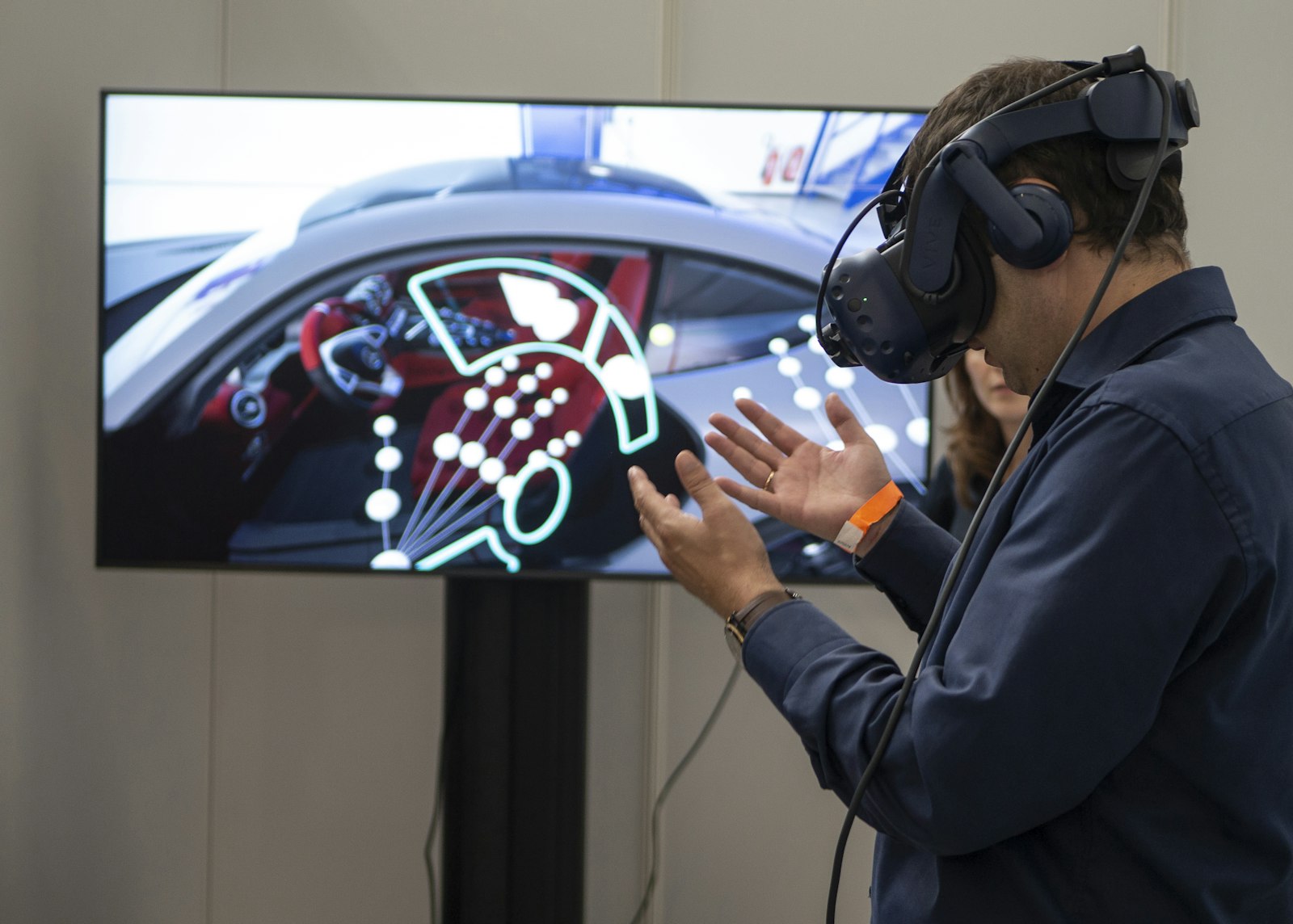
- Activate VR mode via Nscape — the project converts automatically into a navigable VR scene using the Nscape engine inside Art Rocket
- The client walks in — with a VR headset or directly on a phone / tablet
The client is no longer looking at a picture. The client is standing in their kitchen, opening drawers, checking shelf heights, seeing how the granite countertop reads against the white lacquered MDF facades.
What the client sees
- 1:1 scale — proportions are exact, nothing left to imagination
- Real materials — textures faithful to the SKUs ordered, with live prices from the supplier catalog inside Art Rocket
- Natural lighting simulation — different times of day, different window orientations, rendered by Nscape
- Interactivity — opening doors, pulling out drawers, checking storage
- Alternatives in real time — changing facade colors or countertop materials without rebuilding the model
Concrete results: VR by the numbers
Conversion lift
Industry data shows that VR presentations lift conversion rates by up to 94% compared to PDF or static-render presentations. The reason is simple — the client is no longer buying a promise, they are buying an experience they have already lived through. Art Rocket's Nscape integration on SketchUp 2026 delivers that experience without a plugin chain.
Faster decisions
With traditional presentations, the cycle from first meeting to signed contract is 2-3 weeks. With VR powered by Nscape on SketchUp 2026, this cycle compresses to a few days. The client sees, understands, decides — without "let me think about it".
Fewer post-installation complaints
Designers running VR walkthroughs on Art Rocket report close to zero post-installation complaints about proportion, material or color. Everything the client sees on delivery, they have already approved in VR — on the SketchUp 2026 model, with the exact SKUs from the Art Rocket supplier catalog.
The practical workflow on Art Rocket
| Step | Time | Tool |
|---|---|---|
| Model the kitchen in 3D | 30-60 min | Art Rocket on SketchUp 2026 |
| Apply materials from supplier catalog | 5-10 min | Art Rocket live catalog (1,500+ SKUs) |
| Generate cut list + cost | 5 sec | Art Rocket (automatic) |
| Activate VR scene | 30 sec | Nscape inside Art Rocket |
| Client VR walkthrough | 10-20 min | VR headset + Nscape |
| Approval and CNC export | 5 sec | Layout 2D + Art Rocket CNC export |
Equipment: what you actually need
- A Windows laptop or desktop capable of running SketchUp 2026 (mid-range GPU, 16GB RAM recommended)
- A VR headset — Meta Quest 3 or equivalent. The annual Interior Designer plan (€1,188) includes a free Start Kit with VR glasses so you do not have to buy one separately.
- An Art Rocket subscription — starting €99/month, Nscape VR included, no external rendering license required.
Compare to the traditional stack: SketchUp license + V-Ray or Enscape separately + external VR tool + plugin compatibility maintenance. Art Rocket bundles all of it on SketchUp 2026 for a single monthly price.
Why this runs on SketchUp 2026
Art Rocket is not a standalone VR tool. Art Rocket is an official extension on the SketchUp 2026 engine, and Nscape is the VR rendering module embedded inside Art Rocket. That architectural choice matters because:
- SketchUp 2026 is the industry-standard 3D modeling environment — 50M+ designers worldwide already know it, so Art Rocket onboarding takes 1-2 days, not weeks
- Nscape VR is integrated natively — no plugin chain, no compatibility maintenance
- Layout 2D ships in the same environment, so the CNC export after the VR approval requires no reformatting
- SketchUp has existed since 2000 — the foundation is stable, not a startup that might pivot next year
For the designer, the practical upside is a single workflow from model to VR to production, all inside one tool stack running on SketchUp 2026.
VR is not a gimmick — it is how the furniture industry closes deals in 2026. And the fastest path into it is Art Rocket on SketchUp 2026, with Nscape already wired in.