The furniture industry is structurally fragmented. A designer models in one software, hunts for materials in another place, emails specs to the factory, calls suppliers to check prices and stock. Every handoff is manual — and every manual handoff introduces errors, delays and money lost between the cracks.
Art Rocket puts three sides onto the same platform: designers, material suppliers and B2C clients who order custom furniture. It is not a standalone 3D tool. It is an extension built on the SketchUp 2026 engine that turns a professional modeling environment into a connected furniture marketplace — design, materials, client acquisition and manufacturing in one loop.
What Art Rocket is — built on SketchUp 2026
Art Rocket is an official extension running on SketchUp 2026, with Nscape VR for photoreal rendering and Layout for 2D technical documentation. Designers already familiar with SketchUp adopt Art Rocket in 1-2 days because the modeling environment is the same — Art Rocket adds the furniture-specific layer on top:
- Parametric furniture modules (carcasses, facades, fittings)
- Live supplier catalog with 1,500+ SKUs (particleboard, MDF, facades, hardware, appliances, lighting)
- Automatic cost calculation and cut lists
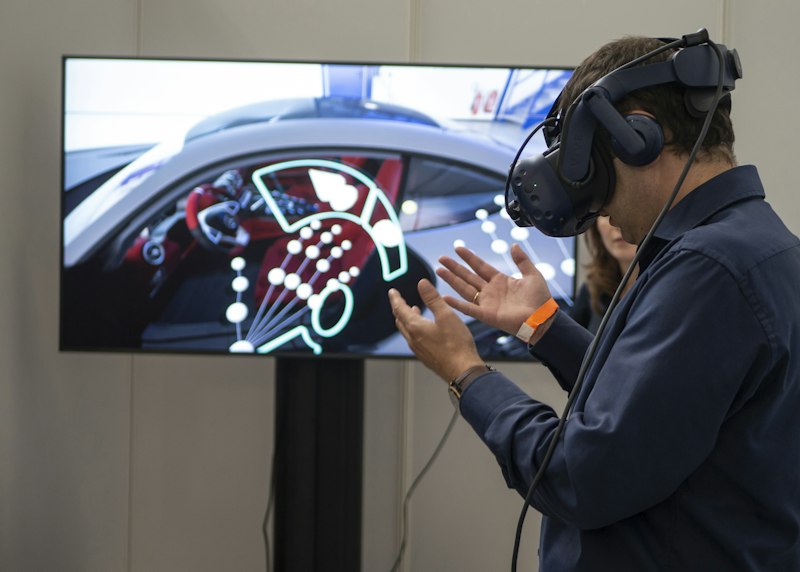
- VR client walkthroughs via Nscape
- Production export to DXF, BAZIS, OpenCutList
- Built-in CRM for projects, clients and transactions
This is important for positioning: Art Rocket does not compete with SketchUp. It uses SketchUp as the foundation and builds the furniture ecosystem on top. Where tools like PRO100, Bazis or 3ds Max are closed silos, Art Rocket sits inside a professional 3D environment that designers already know and trust.
The three sides of the marketplace
Art Rocket is a three-sided platform. Each side is real, active and measurable:
- Designers (1,220 active) — furniture and interior designers who pay a subscription, model projects fast, get B2C clients through the platform and earn commission on material sales inside their own projects.
- Material suppliers (17 active, 1,500+ SKUs) — publish their live catalog into the software where designers work every day. Zero commission on catalog listings. They reach 1,220 active designers without a showroom, without field reps, without paid advertising.
- B2C clients — homeowners and businesses ordering custom furniture. They come in through
/comanda-designat €10/m² design service, versus €50/m² on the traditional market, and receive a project in 30 minutes to 3 hours depending on complexity.
Each side feeds the other two. Art Rocket is the connective layer that keeps information flowing between all three without loss.
How designers earn on the platform
The work itself
A designer opens Art Rocket inside SketchUp 2026 and produces a complete 3D project in 30-60 minutes for a single room or kitchen, 1-3 hours for a full apartment. Materials are selected from the local supplier catalog. VR is generated with Nscape for the client walkthrough. Layout produces the 2D technical documentation. CNC export to DXF or BAZIS happens with one click.
Any professional 3D software can model furniture. The ecosystem adds what standalone tools cannot:
Real materials with live pricing
When a designer picks particleboard in Art Rocket, it is not a generic color swatch. It is a specific SKU from a real supplier with current price, current stock, delivery timeline and accurate texture in the 3D render. The most common failure mode of traditional design — "we showed the client a material that is out of stock or got 20% more expensive" — is simply removed.
Two income streams for designers
Stream 1 — Design service. Designers charge €10/m² through the platform. The average B2C project value and volume inside Art Rocket's active markets is documented in the platform's CRM.
Stream 2 — Material commission. Designers earn 10% on every material sale that flows through their projects. If a project specifies €2,000 of particleboard, edge banding, countertops and hardware, the designer receives €200 without any additional work — those materials were going to be selected anyway. At 10 projects per month with €1,500-3,000 in materials each, this stream alone produces €1,500-3,000/month, which covers the full subscription and then some.
Subscription pricing
- Furniture Designer: €99/month, or €594 for 6 months
- Interior Designer (premium): €199/month
- Annual plan with Start Kit (VR headset included): €1,188/year
- Free trial: 30 days, full access
Acquisition cost for a designer on the platform is below €8 per lead (CAC €0.50), and the Technical University of Moldova (UTM) integrated Art Rocket into its curriculum in 2026, which is producing a pipeline of new designers already trained on the tool.
How suppliers benefit — zero commission, direct distribution
The problem suppliers actually have
Suppliers of particleboard, MDF, edge banding, hardware and countertops compete on visibility. Traditionally that means printed catalogs distributed by hand, personal relationships with a limited circle of designers, and showrooms visited by a small number of professionals per week. New or regional suppliers get locked out of projects simply because the designer already has a habit with someone else.
What the platform does for them
The supplier's SKUs are listed inside the software where the designer is actively making decisions. Not in a separate website the designer has to remember to visit — inside Art Rocket, at the exact moment the material is being chosen.
The mechanism:
- The supplier publishes products with prices, images, technical specs
- The designer sees the supplier's materials alongside alternatives in the same catalog view
- When the designer selects a material, the order routes automatically to the supplier with exact specification: quantity, cut dimensions, edge banding type
- Price and stock updates happen in real time — no stale catalogs
Commission: 0% on the supplier side
The reason is structural: the ecosystem needs a deep catalog to be useful to designers. More suppliers and SKUs means more useful software, which means more designers, which means more material orders for every supplier listed. Charging suppliers would shrink the catalog and break the loop.
Current supplier traction
- 17 active suppliers with live catalogs
- 1,500+ SKUs (particleboard, MDF, facades, hardware, appliances, lighting)
- 1,220 active designers as the reachable audience — the distribution a supplier gets from day one
How B2C clients order custom furniture
The third side is the end client — the person or business ordering the furniture. They enter through /comanda-design on the Art Rocket domains (artrocket.ro, artrocket.eu, art-rocket.ru, artrocket.kz, artrocket.uz).
What they get:
- Design at €10/m² — versus €50/m² on the traditional market, a 5x price reduction on the design service itself
- Turnaround of 30 minutes to 3 hours depending on project complexity (single room versus full apartment)
- VR walkthrough — the client puts on a headset and walks through the future kitchen or apartment before approving. Decisions that traditionally took 2-3 weeks of back-and-forth happen in days
- Transparent materials — the client sees exactly which SKUs from which supplier at what price go into their project
- Production-ready handoff — the factory receives native CNC files (DXF, BAZIS), not a PDF to reinterpret
The B2C client pipeline is live in Moldova and Romania, with rollout in progress across the other active markets.
How Art Rocket monetizes
Revenue flows from two sides, leaving suppliers on 0%:
- Designer subscriptions — €99-199/month per seat, €1,188/year with Start Kit. 126 paying subscribers currently, growing 30% YoY. This produces the MRR €15K base.
- 10% commission on furniture sales — Art Rocket takes 10% on furniture projects closed through the platform. Average deal size is €40K, which makes the commission line significant per transaction.
- B2C design service — €10/m² for the design piece itself, which is a platform-level revenue line independent of the subscription and the commission.
Total: MRR €15K, ARR €300K after 18 months, CAC below €8, 5 active countries, target of 10 countries × 1,000 designers = 10,000 designers across Europe, MENA and the USA.
The full flow — from client request to delivered furniture
A typical project travels through the ecosystem like this:
- Client request — lands either directly with a designer or through
/comanda-designon the platform - 3D project — designer models in Art Rocket on SketchUp 2026, in 30 minutes to 3 hours depending on scope, using real SKUs from the live supplier catalog
- VR walkthrough — client approves the final variant through Nscape VR
- Automatic outputs — technical specs, optimized cut list, CNC files, bill of materials — all generated from the same model
- Material order to suppliers — routes automatically with exact quantities, zero surplus
- Factory receives native CNC files — DXF, BAZIS, OpenCutList — production starts immediately, no reinterpretation
- Furniture delivered and installed — designer earns 10% commission on materials, Art Rocket takes 10% on furniture, supplier keeps 100% of their catalog price
Every step is connected to the same 3D model. No manual re-entry, no format conversion, no translation loss between the designer, the supplier and the factory.
Why the ecosystem is the real differentiator
Standalone furniture CAD tools — PRO100, Bazis (Базис-Мебельщик), 3ds Max — all solve one slice of the problem. PRO100 models corpus furniture on legacy desktop software. Bazis is strong on production output for Russian factories but weaker on UX and Russian-only. 3ds Max is a generic 3D tool, powerful but slow and expensive at €2,000/year, aimed at architects rather than furniture specialists.
None of them have a 3-sided marketplace. None of them deliver a B2C client pipeline to the designer. None of them have 17 material suppliers publishing live catalogs into the same working environment. That is the structural difference — not a feature, a different shape of product.
| Criterion | Standalone CAD (PRO100, Bazis, 3ds Max) | Art Rocket ecosystem |
|---|---|---|
| 3D design | Yes | Yes (on SketchUp 2026) |
| Real supplier catalog inside the software | No | 17 suppliers, 1,500+ SKUs |
| VR walkthrough for the client | Limited or external | Native via Nscape |
| Automatic technical documentation | Partial | Full (via Layout) |
| CNC export | Manual or third-party plugin | Native — DXF, BAZIS, OpenCutList |
| B2C client pipeline | No | Yes — /comanda-design, €10/m² |
| Designer revenue from materials | No | 10% commission on material sales |
| Supplier commission on catalog | N/A | 0% |
| Onboarding for SketchUp users | N/A | 1-2 days |
For a deeper comparison of each tool, see Best Furniture Design Software in 2026.
Key numbers in one place
- 1,220 active designers on the platform
- 126 paid subscribers (€99-199/month)
- 17 material suppliers with live catalogs
- 1,500+ SKUs in the catalog
- MRR €15K · ARR €300K after 18 months
- 5 active countries — Moldova, Romania, UAE, Kazakhstan, Uzbekistan
- 30 min to 3 hours per project depending on complexity
- €10/m² B2C design service (vs €50/m² traditional)
- 10% commission to designers on material sales
- 10% Art Rocket commission on furniture sales (avg deal €40K)
- 0% commission to suppliers on catalog listings
- 1-2 days onboarding for designers already using SketchUp
Conclusion
Art Rocket is not another furniture modeling tool. It is a three-sided marketplace running on SketchUp 2026, with 1,220 designers, 17 suppliers and a live B2C client pipeline, operating across 5 countries after 18 months.
Designers work faster and earn twice — once on design service, once on material commission. Suppliers get distribution into 1,220 active designers with zero commission on their catalog. B2C clients receive custom design at one-fifth of the traditional market price, with VR approval before anything goes into production. Art Rocket captures a subscription line and a 10% commission on the furniture volume that flows through the system.
Every side has a concrete reason to be there. That is what makes it an ecosystem instead of a software license.